Author: cpcqc

NEST Update: 100% Hospital Readiness & MOC Credit Approval

The NEST (Newborn Evidence-based Sleep Teaching) initiative successfully launched in early 2026 with strong engagement from nine participating hospital teams across Colorado. We are pleased to share that 100% of participating hospitals have completed the baseline NEST Hospital Readiness Assessment, providing an important foundation for identifying implementation priorities and tailoring support throughout the initiative.

The readiness assessment helps hospital teams assess current practices on their units related to safe sleep education and modeling, discharge workflows and referral pathways, and coordination with outpatient and community partners. Results are used to guide site-specific quality improvement efforts and ensure that implementation strategies are responsive to each hospital’s needs. One of the things I’ve appreciated most in these early months is seeing how thoughtfully each hospital team is approaching this work within the context of their own unit and workflows. Some teams are building on strong existing safe sleep education practices while focusing on strengthening their discharge processes or referral pathways, while others are taking a closer look at how safe sleep conversations are introduced to families during the postpartum stay. The goal is to make safe sleep support a more consistent and supported part of routine newborn care so that families leave the hospital with both the information and the support they need.

During the first phase of implementation, sites have begun:

  • Conducting crib audits and chart reviews to assess safe sleep support on newborn units
  • Reviewing early unit-level data since implementation
  • Identifying opportunities to strengthen safe sleep education and home environment screening
  • Improving referral pathways and discharge workflows for families who may need additional resources

Participating hospitals are also engaging in the NEST learning collaborative and coaching sessions, where teams share implementation strategies with one another, discuss barriers, and receive quality improvement support as they work toward strengthening safe sleep practices across newborn care settings.

Clinical Incentive: MOC Part IV Credit Now Available

We are also excited to share that participation in NEST has been approved for Maintenance of Certification (MOC) Part IV credit by the American Board of Pediatrics.

Pediatric clinicians at participating hospitals can earn 25 points of MOC Part IV credit by actively engaging in NEST quality improvement activities, including:

  • Reviewing unit-level crib audit and chart review data
  • Implementing safe sleep improvements within their newborn units
  • Participating in learning collaborative sessions and QI coaching calls

This approval recognizes NEST as a structured, evidence-based quality improvement initiative and provides an additional incentive for clinical teams to participate. By aligning safe sleep implementation with board certification requirements, NEST supports both improved infant safety and meaningful professional development for clinicians across Colorado.

MOC approval also helps recognize the time and effort clinicians may already be investing in improvement work on their units and encourages physician engagement alongside nursing and multidisciplinary teams working to strengthen safe sleep practices. When physicians, nurses, and other members of the care team are engaged together in this work, it helps ensure families hear consistent safe sleep guidance and supports the kind of shared culture that makes safe sleep practices easier to sustain across the unit.

For details on how clinicians can earn MOC credit through NEST, view the MOC One-Pager.

Cribs for Kids 6

Image: Cribs for Kids

New Report: Understanding Severe Maternal Morbidity in Colorado

Every mother in Colorado deserves a safe and respectful start to parenthood.


For the first time, Colorado has a comprehensive, statewide picture of severe maternal morbidity (SMM), the most serious complications of childbirth that do not result in death and a critical indicator of how well our systems support safe, healthy births. This new analysis from the Colorado Perinatal Care Quality Collaborative (CPCQC) marks an important milestone for maternal health in our state. Until now, Colorado lacked a unified, statewide view of SMM trends, disparities, and risk patterns. This report changes that.

By bringing together five years of delivery hospitalization data, the analysis sheds light on where complications occur, who is most affected, and what patterns can help guide prevention. It equips Colorado with the kind of actionable information that strengthens maternal safety systems, advances equity, and guides policy and quality improvement across the state.

This report also reflects CPCQC’s role as Colorado’s statewide leader devoted to advancing safe, equitable, high-quality care for mothers and babies. By translating complex data into clear, useful insights, CPCQC continues to support hospitals, providers, community partners, and policymakers in improving outcomes for families across the state.

The findings highlight important patterns in maternal health and point toward steps we can take to make childbirth safer and more equitable for every family in Colorado.

Read the brief here: A Closer Look at Severe Maternal Morbidity in Colorado: Trends, Disparities, and Opportunities for Action

Key takeaways from this new analysis:


1. Severe maternal morbidity is serious but preventable

SMM is a useful tool for understanding patterns in maternal health because it captures complications that pose immediate, significant risk. Colorado’s data show that these conditions are relatively rare, but when they occur they can have lasting impacts on women and families. The new report provides a statewide picture of these complications and the environments where they occur, helping Colorado identify where prevention efforts can have the greatest impact.


2. Deep and persistent inequities remain

The report finds clear disparities that reflect social and structural conditions, not individual choices. Black and Native American women in Colorado experience SMM at nearly twice the statewide rate. Women with Medicaid coverage also have higher rates of severe complications.

These differences align with national trends and reflect longstanding gaps in access, resources, and support. Addressing these disparities requires coordinated work across clinical care, community systems and policy.


3. Where someone lives strongly shapes their risk

Rural residents face some of the highest SMM rates in the state. Many families in rural areas must travel long distances to reach a hospital that delivers babies, and the troubling trend of obstetric unit closures has increased those travel times even further.

Research from other states reinforces this concern. A large study from Pennsylvania found that the risk of adverse maternal outcomes increased significantly for people who lived 60 kilometers (about 37 miles) or more from their delivery hospital. Colorado shows a similar pattern: among rural birthing people who experienced SMM, the average distance to the delivery hospital was also roughly 37 miles.

Colorado’s mountain roads, winter weather, and recent maternity unit closures mean longer, more complex journeys to care for many rural families.


4. Clinical complexity matters: age, underlying conditions, and cesarean delivery increase risk

SMM is more common among older birthing people, and among those with underlying conditions such as hypertensive disorders. Birthing individuals age 40 and older experience severe complications at more than twice the rate of those in their early twenties. Cesarean deliveries also carry higher risk than vaginal births because they involve major surgery and often occur in already medically complex situations. These findings underscore the importance of well-coordinated systems of care that can identify risks early and respond quickly when complications arise.


5. Colorado has a clear pathway to improve maternal safety

The report outlines five areas where coordinated action across hospitals, communities, and state partners can make the greatest difference:

  1. Strengthening clinical readiness and emergency response, especially in rural communities.
  2. Improving access to high-quality prenatal and postpartum care.
  3. Addressing disparities related to race, geography and insurance.
  4. Strengthening data linkages to better understand and address maternal health risks.
  5. Expanding support for maternal mental health and substance use care.

Colorado has strong quality improvement infrastructure through CPCQC, statewide collaboration with hospitals, and new commitments under SB 24-175. These systems provide a strong foundation for reducing preventable complications.


Read the full Severe Maternal Morbidity Brief

The complete analysis, including regional data and recommendations, is available here:
A Closer Look at Severe Maternal Morbidity in Colorado: Trends, Disparities, and Opportunities for Action

New Report: Perinatal Mental Health and Postpartum Care in Colorado: 2019–2023

Maternal mental health conditions remain one of the leading drivers of pregnancy-related complications and deaths in Colorado.

New findings from the Colorado Perinatal Care Quality Collaborative (CPCQC) reveal both progress and persistent gaps in mental health and postpartum care during the perinatal period.

CPCQC partnered with the Center for Improving Value in Health Care (CIVHC) to analyze more than 170,000 deliveries that occurred in Colorado between 2019-2023—about half of all births in the state—using the Colorado All-Payer Claims Database. The study examined patterns of mental health diagnoses, perinatal mental healthcare use, and postpartum visit attendance from pregnancy through 12 months after delivery.

This Executive Summary distills the key insights from that analysis, highlighting where progress has been made and where opportunities remain to strengthen care.


Key Takeaways

  • 1 in 3 Colorado births involved someone with a diagnosed mental health condition, most commonly depression or anxiety.
  • 2 in 3 postpartum individuals with a mental health diagnosis did not receive any mental health services during or after pregnancy.
  • Only 8% of those with a diagnosed mental health condition completed five or more mental health visits, far below recommended treatment levels.
  • 70% attended a routine postpartum visit by 12 weeks, up from 2019—but 30% did not.
  • Signs of progress include increased screening, earlier postpartum follow-up, and greater use of mental health services from 2019-2023.

Read the Reports


Why It Matters

The weeks after birth are the most vulnerable period for new parents—especially for those with mental health conditions. Suicide remains the leading cause of pregnancy-associated death in Colorado, and all such deaths have been deemed preventable. Ensuring early, sustained, and coordinated postpartum care can save lives and improve the well-being of families statewide.


About the Partners

  • Colorado Perinatal Care Quality Collaborative (CPCQC): A statewide nonprofit working to improve maternal and infant health through data, collaboration, and quality improvement.
  • Center for Improving Value in Health Care (CIVHC): A nonprofit organization managing the Colorado All-Payer Claims Database (CO APCD) to advance data-driven insights and value-based care.

On-Demand Webinar Series: Improving Healthcare with Race, Ethnicity, and Language (REL) Data

Accurate REL data is key to identifying and addressing health disparities. CPCQC’s free, three-part webinar series—led by the Center for Health Care Strategies (CHCS) during spring 2025—teaches best practices for improving data collection and using it to drive quality improvement (QI).

Designed for nurses, physicians, administrators, and intake staff, each one-hour session will provide practical strategies to enhance patient trust, apply a health equity lens to QI, improve accurate collection of REL data, and communicate the importance of data collection.

Watch one or all 3 videos—there’s no wrong door!

Topics include:

📌 Culturally sensitive approaches to data collection
📌 Integrating health equity into QI practices
📌 Effectively communicating data collection efforts

Reducing Stigma in Perinatal Substance Use Care: Training Impact Summary Now Available

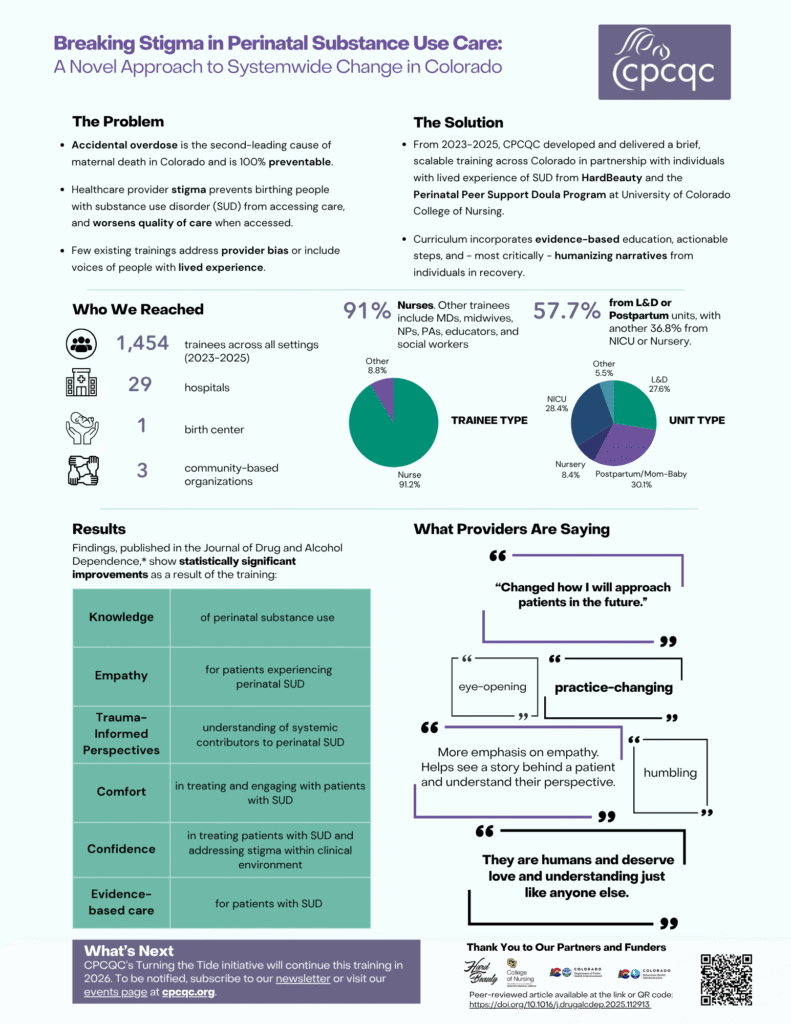
From 2023–2025, CPCQC partnered with lived experience experts from HardBeauty and the Perinatal Peer Support Doula Program at the CU College of Nursing to deliver a groundbreaking training aimed at reducing stigma toward pregnant and postpartum people with substance use disorder (SUD). Accidental overdose is the second-leading cause of maternal death in Colorado, and provider stigma remains a major barrier to care.

The training reached 1,454 healthcare providers across 29 hospitals and multiple care settings. Evaluation findings, published after peer review in the Journal of Drug and Alcohol Dependence, suggest statistically significant improvements in provider knowledge, empathy, confidence, and comfort in caring for people with perinatal SUD.

CPCQC’s Turning the Tide initiative will continue this training in 2026. To be notified when training dates are announced, please subscribe to our newsletter or visit our events page.

Read the one-pager below to learn more about the training, and check out the peer-reviewed article!

Bridging the Gap: CPCQC’s SPARK Initiative and the Future of Postpartum Care in Colorado

Every time I discharge a new parent from the hospital, I think about the moments that lie ahead. The exhaustion of sleepless nights. The joy of first smiles. The weight of responsibility. For some, those early weeks are filled with love and support. For others, they are fraught with isolation, health complications, or a growing sense that something just isn’t right.

That’s where we need to do better.

At CPCQC, we know that the transition from hospital to home is one of the most critical—and vulnerable—times for new parents and babies. In Colorado, a majority of maternal deaths occur during the period between hospital discharge and 1 year postpartum. That’s why we are launching the SPARK (Supporting Postpartum Access, Recovery, and Knowledge) initiative in July 2025—a statewide effort to help hospitals strengthen their postpartum care models and create safer, more supportive transitions for families.

This initiative is about more than just discharge instructions and follow-up appointments. It’s about making sure that every birthing person and newborn has access to the right care, at the right time, and with the right support—no matter their zip code, insurance status, or risk factors.

And it’s about bringing our broader vision to life:

1. Helping Hospitals Succeed Under Senate Bill 24-175

With SB 24-175 requiring all Colorado birth hospitals to participate in at least one CPCQC quality improvement (QI) initiative, the SPARK initiative provides a powerful opportunity for hospitals to meet this requirement in a way that directly impacts patient outcomes.

By participating, hospitals will receive:

  • Evidence-based best practices for postpartum care transitions.
  • Tools for risk stratification, ensuring high-risk patients receive enhanced follow-up.
  • Peer learning opportunities so that hospitals can share challenges and successes.
  • Support to meet additional hospital quality program requirements such as the HQIP Postpartum Discharge Transitions measure.

This isn’t just about compliance—it’s about transforming the standard of postpartum care in Colorado.

CPCQC Welcomes FAMLI in 2024

At long last, January 2024 and the full implementation of Family and Medical Leave Insurance (FAMLI) Program marks a new day for maternal and infant health in Colorado!  Our organization is thrilled that Colorado voters took the step to move forward with paid family leave several years ago and that this essential benefit is finally here.

I currently serve on the National Taskforce for Maternal Mental Health led by the federal health, mental health, and human services agencies. My assignment as part of the subcommittee on the prevention, screening and diagnosis of perinatal mental health concerns is to work with my committee members on a short list of recommendations for policy, practice, and federal engagement that will significantly impact these components of maternal mental health care. My number one recommendation to the subcommittee is paid family leave.

Here are just a few reasons why that is my number one recommendation, and it isn’t just about mental health. Paid family leave impacts so much for both caregivers and their infants.

  • A recent article in the Obstetrics and Gynecology journal found that “respondents from states with strong paid family and medical leave had a greater likelihood of breastfeeding and had lower odds of postpartum depression symptoms, with stronger associations among respondents with deliveries covered by Medicaid insurance. Despite major potential health benefits of paid family and medical leave, the United States remains one of the few countries without federally mandated paid parental leave.”
  • The PN-3 Policy Impact Center, a clearinghouse for effective policy solutions for parents and young children, documents the research demonstrating a robust array of benefits from paid family leave of at least six weeks that affect the health and well-being of both the parents and infant.
    • Increases the likelihood and length of leave-taking for mothers and on maternal labor force attachment
      • Increased maternal labor force participation in the months surrounding birth by up to 8 percentage points.
    • Reduces racial disparities in leave-taking, and
      • Increased the rates of leave-taking by 14.4 percentage points among Black mothers and 6.4 percentage points among Hispanic mothers.
    • Has beneficial effects on postneonatal infant mortality, parent and child health, and nurturing and responsive parenting.
      • Reduced postneonatal mortality (infant death between 28 and 364 days of life) by 12%.

Our Primary Cesarean Program is Planning a Re-launch in 2024

While cesarean deliveries can be lifesaving, there is no evidence that the high instance of cesareans in the United States (1 in 3 births) reduces infant or maternal morbidity and mortality. On the contrary, evidence shows cesarean sections are overused, putting some birthing people and infants at needless risk. Unnecessary cesareans increase maternal mortality and morbidity rates. According to the Colorado Maternal Mortality Review Committee, cesarean sections contributed to 20% of pregnancy-related deaths from 2017-2020.

Though Colorado’s overall cesarean delivery rate (27.2%) is below the national average (32.1%), rates vary greatly among providers and facilities from 7% to 45%. Where a person chooses to give birth impacts their likelihood of having a Cesarean birth. The hospital itself is considered an independent risk factor for a cesarean birth.

Equally alarming, these Cesarean births are not distributed equally among populations. Racial disparities present a grim picture, with the CDC reporting that Black birthing people are more likely to undergo a Cesarean and significantly more likely to die from pregnancy-related causes compared to their White counterparts.

Cesarean births have numerous implications for patient care and healthcare management. Cesarean birth increases hospital stays and rates of hospital readmission for both the birthing person and the newborn. Preventing unnecessary cesarean births positions Colorado hospitals to benefit from state and national incentive programs such as HQIP and the CMS Birthing Friendly Hospital designation, and maintain Joint Comission accreditation.

CPCQC leads hospitals in implementing the Safe Reduction of Primary Cesarean Birth AIM Patient Safety Bundle. To do this, CPCQC facilitates a free collaborative learning environment for participating hospitals to foster partnerships and accelerate quality improvement. Research shows that educational experiences that are active, social, contextual, engaging, and learner-owned are more likely to result in long-term change.  Learning collaboratives:

  • Create opportunities to build and exchange knowledge on measure testing, implementation, and data collection.
  • Disseminate information gained from the implementation of quality improvement.
  • Provide a forum to share successes and challenges to build capacity and sustainability for improved patient care and outcomes.

Racial Disparities in Colorado Maternal Outcomes: A Call to Action

By CPCQC and the Colorado NAACP

Recent data shows sobering statistics of increased rates of maternal mortality and persisting racial disparities nationwide. This data reminds us that we have so much more work to do to improve equity to access and care for moms, birthing people, and their babies across our country and in our state. CPCQC is coming to the table with the NAACP to talk about maternal health and to find new ways to connect and align our work in ending racial disparities in maternal and infant health outcomes.

The data has also given us more insight into the depth of the disparities in maternal health outcomes across communities of color in Colorado. Given so many have come together across our state to make meaningful change, sometimes disheartening data, such as this, can be hard to accept. However, we can and we must accept what the data tells us and use it to continue to improve how we care for all moms, birthing people, and their babies throughout the perinatal period.

This week we anticipate the release of the Colorado Department of Health Care Policy and Financing’s Maternal Health Equity report and all that it will reveal on the health and well-being of Black mothers and birthing people in Colorado who are covered under public health insurance for maternity care. However, we know that much of what the CDC reports on racial disparities in maternal outcomes nationally is also playing out in Colorado. And, new data from the Colorado Department of Public Health and Environment reports that Maternal Mortality Review Commission (MMRC) data between 2014–2018 showed that the pregnancy-associated mortality ratio was disproportionately high for Native Americans in Colorado (233.4 compared to the average of 46.6), and the pregnancy-related mortality ratio for Black Coloradans was significantly higher than the average (52.0 compared to 19.7). Starting with maternal deaths in 2017,  the MMRC assessed whether discrimination—through implicit bias, structural racism, or interpersonal racism—was a contributing factor. To date, it has been found that discrimination contributed to 39.6% of all maternal deaths. A 2019 Medicaid report also showed that Native American and Black patients were less likely to receive timely prenatal care (72.1% and 73.0% respectively, compared to 77.1% of all Medicaid patients).

Using newly analyzed discharge data provided by Colorado Hospital Association for 2022, Black mothers are 53% more likely to experience SMM than their white counterparts which is only surpassed by Native American mothers who are twice as likely (98%). Hispanic mothers are 28% more likely to experience severe maternal morbidity and Asian mothers – 20% more likely.

Severe maternal morbidity (SMM) is a measure of unexpected outcomes of labor and delivery that result in significant short- or long-term consequences to a birthing person’s health. While maternal mortality rates reflect the worst possible outcome of a pregnancy, because SMM includes patients whose health was severely impacted by birth but did not die as a result of their pregnancy, SMM rates reflect negative outcomes that occur in a larger population of patients, and include “near-misses.”

Colorado Perinatal Care Quality Collaborative Responds to the Closure of Obstetric Services at Arkansas Valley Regional Medical Center

Press Release
FOR IMMEDIATE RELEASE
Date: Monday, February 10th 2025
Contact: info@cpcqc.org

Denver, CO – (February 10th, 2025)–As Colorado’s leading institution dedicated to improving perinatal health outcomes for mothers and infants, the Colorado Perinatal Care Quality Collaborative (CPCQC) responded to the Arkansas Valley Regional Medical Center (AVRMC) announcement of the closure of its obstetric services, effective April 30, 2025.

“The decision to close obstetric services at AVRMC, as stated by their leadership, was driven by significant financial losses, low birth volumes, underfunding from Colorado Medicaid, and staffing shortages—highlighting the dire situation faced by rural healthcare facilities in maintaining essential maternity care services,” said Rebecca Alderfer, CPCQC Executive Director. “The loss of labor and delivery services in this region underscores the urgent need for systemic changes to address financial sustainability, workforce shortages, and enhanced training to support access safe and equitable perinatal care across the state.”

Based on utilization data reviewed by the Colorado Hospital Association, six L&D units have closed in Colorado since 2018. Four of these closures have occurred in rural areas and two in urban areas. One additional rural hospital temporarily closed its L&D unit and then reopened due to a community-driven response. CHA’s analysis shows that, on average, patients drive more than 100 miles to receive maternity care in several counties in eastern and southern Colorado.

The solutions to sustaining maternity care services in rural communities across the state are complex.  CPCQC works with partners to assess the role of technology, telehealth, safe transfers to higher acuity settings, new financing models, and workforce capacity building, among others, to create a network of obstetric support and safety across the state.

Alderfer added, “The time for investing more, not less, in maternal and infant health is now! With increasing maternal and infant mortality, it is imminent that we lead on reducing the preventable causes of these deaths, ensure that safety and accountability are integrated into all birthing facilities, and improve the continuity of care from pregnancy throughout the first year postpartum.”

About CPCQC: CPCQC works on the front lines of perinatal care, collaborating directly with medical organizations, healthcare providers, state and federal policymakers, patients, and community organizations. Our mission is to ensure that mothers, birthing individuals, and their families in Colorado receive safe, equitable, and high-quality care, regardless of who they are or where they live. Through innovative programs, advocacy, and partnerships, CPCQC strives to address systemic challenges and improve maternal and infant health outcomes across the state. Learn more at cpcqc.org.

Strengthening Support for New Parents: The IMPACT BH Program Launches in New Communities

Preparing for and welcoming a new baby can be a whirlwind. Learning how to feed the baby, changing diapers around the clock, and operating on little sleep can strain even the most confident families. For pregnant and postpartum people who are struggling with their mental health or substance abuse, finding the treatment they need–on top of juggling the demands of caring for a child–can feel impossible.

Fortunately, there are steps communities can take to ensure pregnant and postpartum people can access treatment or support for their behavioral health – when and where they need it. CPCQC’s IMprove Perinatal Access, Coordination, and Treatment: Behavioral Health program (IMPACT BH) strengthens connections and collaboration among organizations serving pregnant and postpartum people—weaving a tight web of support to ensure no family in need of behavioral health services falls through the cracks.

Why IMPACT BH Matters

Successful mental and behavioral health care doesn’t happen in a vacuum. It’s the product of a collaborative, integrated system that helps people access high-quality services in the places that are right for them.

Throughout pregnancy and the postpartum period, parents may receive services from a hospital, a doctor’s office, or other organizations based in the community. IMPACT BH supports these partners in working together–offering training and resources along the way–to make sure birthing parents receive the best possible behavioral health care and support.

How the IMPACT BH Program Works

IMPACT BH helps communities build a strong system of support for birthing people in four ways:

  1. Funding local community-based organizations to enhance perinatal navigation services. Perinatal navigation helps pregnant and postpartum people connect to vital services when they need them. Navigation can be provided through peer support providers, community health workers, doulas, home visitors, or other navigation providers.
  1. Helping health care providers and community-based organizations improve care for perinatal mental health and substance use. IMPACT BH offers training for providers on the best ways to identify perinatal mood, anxiety or substance use disorders and refer birthing people to the type of care they need.
  1. Promoting communication, coordination, and trust among all the places where a pregnant or postpartum person might receive care. IMPACT BH brings together local networks of community-based and clinical providers to improve referrals and care for birthing people within their communities.
  1. Enhancing local perinatal behavioral health solutions. Lessons learned from IMPACT BH help lay the groundwork for policy change and additional resources–ensuring that local perinatal behavioral health solutions have the support they need to continue making a difference for pregnant and postpartum people.

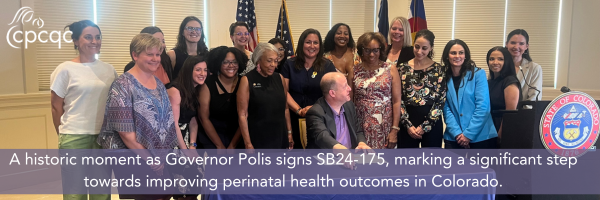
SB24-175, Improving Perinatal Health Outcomes, Is Signed Into Law!

What this means for our work:

The new law allocates $1.3 million dollars to the Colorado Department of Public Health and Environment (CDPHE) for use by the prevention services division to address inequities in care and disparate outcomes among birthing people and their infants. Specifically, the bill directs the CDPHE to partner with CPCQC and:

  • Authorizes CPCQC to track and facilitate implementation of the Maternal Mortality Review Committee’s recommendations to prevent maternal deaths and to issue an annual report on these statewide efforts;
  • Creates a Hospital Perinatal Health Quality Improvement Engagement Program, ensuring that all Colorado hospitals with labor and delivery units and/or neonatal intensive care units provide information on disparities in perinatal health outcomes and engage annually in at least one maternal-infant quality improvement initiative that is led by CPCQC; and
  • Creates a Quality Improvement Engagement Fund to support healthcare facilities that provide perinatal care services with their quality improvement efforts. Priority for financial support will be given to facilities serving the most vulnerable patient populations, including those in rural and frontier counties and those serving a disproportionate share of Medicaid members.

In addition to authorizing the state to formalize its relationship with CPCQC, SB175 includes two other perinatal health provisions aimed at advancing more equitable care and outcomes for birthing people and their infants.

What happens next:

CPCQC will work closely with the CDPHE, hospital leadership, and perinatal health partners statewide to facilitate implementation of the bill in accordance with the following key dates:

  • JULY 1, 2025  – CDPHE launches a program to provide financial support for healthcare facilities to engage in quality improvement (QI)
  • JULY 1, 2025 – Each hospital will begin data submission to CPCQC, including a minimum data set of key drivers of disparities in perinatal health care and outcomes
  • DECEMBER 15, 2025 – Each hospital will participate in at least one CPCQC-led QI initiative

Our state is coming together to coordinate efforts to prevent maternal and infant deaths in Colorado and ensure that all birthing people receive more equitable care.

Have Questions?

Stay informed through our website’s SB24-175 info page and newsletter of new developments as we implement the bill. Please reach out to info@cpcqc.org with any questions.

Championing Maternal Well-Being: CPCQC Contributes to National Strategy On Maternal Mental Health

In a significant move addressing the pressing issue of maternal mental health, the Biden-Harris Administration unveiled the National Strategy to Improve Maternal Mental Health Care on May 14, 2024. The National Strategy recognizes that suicide and unintentional overdose are the leading causes of maternal mortality in the United States; and that over 1 in 5 birthing people and mothers experience perinatal mental health complications.

The National Task Force on Maternal Mental Health, comprised of over 100 perinatal mental health experts, advocates, and people with lived experience; convened for over six months to produce the new strategy. Together, task force members identified five primary pillars for enhancing maternal mental health care across the U.S:

1: Build a national infrastructure that prioritizes perinatal mental health and well-bring

2: Make care and services accessible, affordable, and equitable

3: Use data and research to improve outcomes and accountability

4: Promote prevention and engage, educate, and partner with communities

5: Lift up lived experience

As Colorado’s Perinatal Quality Collaborative, CPCQC participated in the National Task Force on Maternal Mental Health to advocate for the unique needs of Colorado mothers, birthing people, infants, and families. CPCQC Chief Executive Officer, Rebecca Alderfer, reflects

“State Perinatal Quality Care Collaboratives (PQCs) are an essential partner of The National Strategy to Improve Maternal Mental Health, and it was a privilege to be able to share that perspective as a member of the task force.  I look forward to working with our federal and state partners, as well as corporate and philanthropic sectors, to support implementation.  As a leader in maternal mental health over the past decade, I see both the progress and the significant possibility we have to lessen and prevent mental health concerns and to routinely provide effective care for the most common complications in pregnancy and postpartum and one of the leading causes of maternal mortality in Colorado and nationally.”

The new national strategy’s release is timely, coinciding with the Policy Center for Maternal Mental Health’s 2024 state report card release. The Policy Center analysis assesses states across three domains: providers and programs; screening and screening reimbursement; and insurance coverage and treatment. The Policy Center concluded that the U.S. is failing mothers, as over 29 states received a “D” or an “F” for their lack of durable investment in maternal mental health.


The Policy Center for Maternal Mental Health ranked Colorado as “C.” The Center highlighted Colorado’s positive policy efforts to expand insurance coverage and treatment access, alongside the need to continue improving screening rates and increasing access to perinatal mental health services.

Combined, the National Strategy to Improve Maternal Mental Health and the Policy Center for Maternal Mental Health’s report cards charge CPCQC to continue investing in perinatal mental health solutions across Colorado. The documents’ collective emphasis on improving access to mental health services, enhancing provider training, increasing awareness, and reducing stigma surrounding maternal mental health issues mirrors CPCQC’s ongoing efforts to advocate for comprehensive support systems.

Earlier this month, CPCQC released an RFP to expand the IMproving Perinatal Access, Coordination, and Treatment: Behavioral Health (IMPACT BH) Program to Mesa and Montrose Counties.  One of CPCQC’s many programs, IMPACT BH helps communities strengthen and integrate their local perinatal mental health services. Together, counties participating in IMPACT BH work to ensure that no birthing person, mother, infant, or family falls through the cracks due to perinatal mental health challenges.

IMPACT BH to Enhance Perinatal Behavioral Health Services in Mesa, Montrose, and Eagle Counties

Press Release

FOR IMMEDIATE RELEASE

Date: Monday, May 6th 2024

Contact: Aly Boral, CPCQC Integrated Care Program Manager, aboral@cpcqc.org

IMproving Perinatal Access, Coordination, and Treatment Behavioral Health (IMPACT BH) Program to Enhance Perinatal Behavioral Health Services in Mesa, Montrose, and Eagle Counties

Mesa County, CO / Montrose County, CO / Eagle County, CO- The Colorado Perinatal Care Quality Collaborative (CPCQC) is proud to announce the launch of the IMPACT BH program in Mesa and Montrose Counties; and the continuation of IMPACT BH in Eagle County.

Mental health plays a central role in perinatal health. Unintentional overdoes and suicide accounted for 39% of pregnancy-associated deaths in Colorado from 2016 to 2020, according to the Colorado Maternal Mortality Review Committee (MMRC). In response, CPCQC launched the IMprove Perinatal Access, Coordination, and Treatment for Behavioral Health (IMPACT BH) program in partnership with the Colorado Behavioral Health Administration to serve the 1 in 7 people who are affected by perinatal mood and anxiety disorders (PMADs) and the many who struggle with perinatal substance use.

IMproving Perinatal Access, Coordination, and Treatment: Behavioral Health (IMPACT BH) helps communities strengthen and integrate their local perinatal mental health services. The program enhances a diversity of local perinatal navigation and peer support services; provides perinatal mental health and substance use training to local healthcare providers; and helps integrate local perinatal mental health services through improved coordination, communication, and trust. Collectively, IMPACT BH counties work to ensure that no local birthing person, mother, infant, or family falls through the cracks.

“CPCQC is excited to introduce the IMPACT BH program to Mesa and Montrose Counties; and continue the program in Eagle County ” says Kylie Hibshman, Director of Integrated Behavioral Health at CPCQC. ” Together with our partners, we’re working to ensure that perinatal people access safe, effective, and respectful care from conception through one year postpartum. We’re grateful for our current IMPACT BH partners and look forward to working alongside new partners in Mesa and Montrose Counties.”

The Colorado Perinatal Care Quality Collaborative (CPCQC) and the Colorado Behavioral Health Administration (BHA) are seeking to fund the following partners in Mesa, Montrose, and/or Eagle counties for the upcoming grant period from July 1, 2024 – June 30, 2025:

  • Perinatal navigation providers: community-based organizations serving uninsured, under-insured, and/or Medicaid-eligible birthing people, mothers, infants, and families in their local communities. Perinatal navigation providers work to enhance a diversity of perinatal navigation services during the grant period. Navigation may be offered by a diversity of team members, including but not limited to: perinatal peer support providers (perinatal mental health and/or substance use), community health workers, home visitors, doulas, etc. Link to RFP and application here
  • Community lead: community leads partner with CPCQC to promote communication, coordination, and trust across the local perinatal mental health continuum of care through collective action, shared learning, and local perinatal continuum of care working groups. Any interested entity and/or individual with demonstrated health equity community engagement experience may apply to become an IMPACT BH community lead. Link to RFP and application here. 

IMPACT BH offers perinatal mental health and substance use screening, brief intervention, and referral to treatment (SBIRT) technical assistance to outpatient clinics through the Colorado University Practice Innovation Program (CU PIP). In addition, IMPACT BH offers perinatal substance use hospital quality improvement programming to birthing hospitals through CPCQC’s Colorado AIM: Substance Use Disorder (CO AIM: SUD) patient safety bundle and the Maternal Overdose Matters+ (MOMs+) programs. Interested outpatient clinics and birthing hospitals do not need to respond to the RFPs.

Interested partners are encouraged to respond to the above RFP. The RFPs are open from Monday, May 6, 2024 to Friday, May 24, 2024. All applications must be submitted by COB Friday, May 24 at 5:00 PM MT to be considered.

For more information about the IMPACT BH program and how to get involved, please review the linked FAQ document or contact Aly Boral, CPCQC Integrated Care Program Manager at aboral@cpcqc.org or visit www.cpcqc.org

Shifting the Curve to Reduce Maternal Mortality

We are awaiting the anticipated release of data and recommendations from Colorado’s Maternal Mortality Review Committee (MMRC) on pregnancy-associated and pregnancy-related deaths. However, from previously released reports and national trends, we have an idea of what the data will show.

We have only seen an increase in maternal mortality rates in the United States since the CDC first implemented the Pregnancy Mortality Surveillance System in 1986.

  • From 7.2 deaths per 100,000 live births in 1987 to
  • 17.2 deaths per 100,000 live births in 2015 to
  • 32.9 deaths per 100,000 live births in 2021

These grim statistics are desperately headed in the wrong direction, especially for Black and Native American moms and birthing people.

Looking at 2022 data from the Colorado Hospital Association, Black moms are 53% more likely to experience severe maternal morbidity—such as heart failure, eclampsia, hysterectomy, and blood infection or need for blood transfusion—than their white counterparts which is only surpassed by Native American mothers who are twice as likely (98%) as their white counterparts. Alongside these disparities, In Colorado, 39.7% of counties are maternity care deserts. Maternity care deserts are counties in which access to maternity health care services is limited or absent, either through lack of services or barriers to a woman’s ability to access that care within counties.

And we would be remiss not to mention the Supreme Court Dodd Decision which changed the landscape of perinatal health and maternal/fetal medicine with long-lasting, and increasingly alarming national reverberations.

We do not intend to sit idly by with this data. Because these are not just “data.” These statistics represent the people who have influenced and nurtured us, our mothers and grandmothers and parents—humans. These numbers are not just an episode of care or a bundled payment, they represent someone’s body, someone’s emotions and experiences. There is a level of anonymity in talking about data that makes it seem like it isn’t personal, that it is a thing without an owner, without a cause, without an opportunity. But, it isn’t. We have heard from many voices that are the lived experience of some of this data.

The Colorado Perinatal Care Quality Collaborative began operating 47 years ago in recognition of the fact that quality improvement doesn’t just happen. It is a deliberate process of assessment, evidence gathering, intervention, review, and realignment…and repetition. It requires commitment, it requires funding, and it requires a growth mindset – aligned with incentives.

We acknowledge that health systems, hospitals, and clinics are one piece in supporting a change in the trajectory of maternal health and outcomes across Colorado. However, medical care is only part of a large, dynamic array of factors that influence pregnancy, birth, and the start of a new family. It is important that we consider all the complexity and the social and structural factors that contribute in large part to where we are today.  It will take strong leadership and partnership to realize our vision: that EVERY pregnant and postpartum person, infant, and their families in Colorado have access to and receive safe, equitable, high-quality care.

The Power of Partnerships

This fall, CPCQC gathered with partners across the state at the CHoSEN Forum. The semi-annual convening brought providers, organizations, and policymakers together to improve perinatal substance use outcomes. Together, we committed to strengthening the perinatal healthcare system so that all mothers and infants–regardless of substance use or exposure–can thrive.

At the event, participants heard policy updates from Illuminate Colorado, learned about Plans of Safe Care, and connected about toxicology testing best practices. CPCQC and HardBeauty presented on the enduring stigma of perinatal substance use and Hard Beauty peers shared moving substance use and recovery stories.

Attendees recognized their collective power. As Racquel Garcia, CEO and Founder of HardBeauty, reflected, “All the right players were in the room at the right time.”

And so they were. Attendees made critical connections, behind the scenes, that helped a 37-week pregnant mother get into substance use treatment and peer support. Racquel Garcia added,

“We are REALLY saving lives and changing the planet.”

Our Commitment to Collaboration

CPCQC works across the state with partners through quality improvement, policy, and collective impact initiatives to improve birth outcomes. We cannot do this work alone. As one of many Perinatal Quality Collaboratives across the U.S., we are part of a vast network of people, families, communities, organizations, and agencies working to improve lives–together.

We are grateful for each and every one of our partners. Thank you to the organizations, hospitals, teams, and community members who are working alongside us to improve the lives of birthing people and infants.

This November, we invite you to learn more about the breadth of our partnership work.

Partnerships in Action

Collective Impact for Improved Care

In 2021, CPCQC and the Colorado Behavioral Health Administration launched the IMPACT BH. The initiative invests in critical partnerships across the perinatal continuum of care in Garfield, Pitkin, Eagle, and Summit Counties.

Together, we work to help pregnant and postpartum people experience seamless transitions from community-based services to perinatal outpatient care, outpatient care to birthing hospitals, and birthing hospitals back to community-based supports during the postpartum period.

As CPCQC Integrated Care Program Manager, Aly Boral, explains, we can only realize this vision when we work together.

“CPCQC is only a small piece of the puzzle to advance equitable outcomes for our perinatal population. We are intentional about strengthening our partner relationships to ensure that they have all the resources and support they need to produce the direct client and patient work that makes a difference. We cannot thank our community-based and clinical partners enough, our work would be inadequate without them.”

Our partners agree. From partnering to provide bilingual and bicultural support groups, to supporting outpatient providers and birthing hospitals screening for perinatal mood and anxiety disorders, our IMPACT BH partners are working together to provide essential services across the region.

Cathy Story, Director of Community Collaboration at the Quality Health Network (QHN) explains,

“There is not one con for making more connections. What (QHN) has found so far is that openness, this willingness to create connections and learn best practices. I haven’t met one person [though IMPACT BH] who isn’t willing to make connections and stay in conversation [about perinatal outcomes in the region].”

Aligning Perinatal Substance Use Care

This fall, the MOMs+ and CO AIM: SUD (CPCQC program) teams convened to align hospital perinatal substance use quality improvement and technical assistance. Together, we are helping birthing hospitals provide comprehensive support to birthing people and infants impacted by substance use.

It is working. We are proud to share that our partners, MOMs+ and HardBeauty, are presenting on Colorado-based perinatal substance use solutions at the upcoming Rx Summit–the largest national convening to address the opioid epidemic. As Don Stader, MD, FACEP of MOMs+ expressed,

“Our work is changing the landscape of care for women and pregnant persons with SUD across Colorado.”

Rachael Duncan, PharmD, BCPS, BCCCP of MOMs+ added, “What a privilege to do this work!”

The CPCQC team could not agree more. Team member Sarah Briley reflected, “The only way to move this work forward is to build relationships with physicians, midwives, nurses, mental health providers,  pharmacists, and especially those with living experience who can provide real world solutions. These individuals, and their teams, are living in this work everyday.”

Working Together to Reduce Maternal Suicide

This National Suicide Prevention Month, CPCQC joins communities across the United States to raise awareness, spread hope, and share vital information about suicide. Suicide is one of the leading causes of death in the U.S. that disparately impacts people of color, people living in rural communities, members of the LGBTQ+ community, veterans, and Indigenous people—especially if they are pregnant or postpartum.

Last week, the Colorado Department of Public Health and Environment released the Colorado Maternal Mortality Review Committee (MMRC) legislative report. The sobering report reviews the leading causes of death for pregnant and postpartum people in Colorado from 2016 – 2020. While unintentionally aligning with National Suicide Prevention Month, the recently released report adds urgency to CPCQC’s efforts to improve perinatal behavioral health services across the state.

Understanding the Maternal Suicide Crisis in Colorado 

The MMRC found that suicide was the leading cause of pregnancy-associated death in Colorado from 2016 – 2020. Pregnant and postpartum people were over twice as likely to die from suicide than the general population of women of reproductive age in Colorado. In addition, the committee found that mental health contributed to 40% of all pregnancy-associated and pregnancy-related deaths from 2016 – 2020. As the MMRC explained in the report, “Suicide can be determined to be related to the pregnancy in various ways, including pregnancy-related depression or anxiety that leads to suicide, or the inability to access wanted reproductive health care, such as abortion, as a driver of subsequent suicide.”

Perinatal mood and anxiety disorders (PMADs) frequently co-occur with substance use. Pregnant and postpartum people may use substances to cope with stress or manage unmet mental health needs. Unintentional overdose is the leading cause of pregnant and postpartum people in the United States, accounting for 1,586 deaths from 2010-2019.  In Colorado, the MMRC found that unintentional overdose via synthetic opioids was the second leading cause of pregnancy-associated death during the report period. Substance use contributed to 40% of pregnancy-associated and pregnancy-related deaths.

The Need for Universal Screening

The MMRC report underscores the need for universal perinatal mental health and substance use screening, brief intervention, and referral to care for all birthing people across Colorado. The perinatal period provides a unique opportunity to connect individuals struggling with mental health and substance use disorders to care. The American College of Obstetrics and Gynecologists recommends that all perinatal individuals are screened for perinatal mood and anxiety disorders. However, universal screening for PMADs is not required in Colorado, increasing the likelihood that pregnant and postpartum individuals struggling with mental health or substance use disorders remain outside of care–impacting their wellbeing and the wellbeing of their infant(s).

Advocating for Perinatal Mental Health Solutions

CPCQC works across the perinatal continuum of care to improve perinatal mental health and substance use outcomes in Colorado. Together with the Colorado Behavioral Health Administration, CPCQC implements the Improving Perinatal Access, Coordination, and Treatment for Behavioral Health (IMPACT BH)  program to address maternal outcomes by:

  • Investing in Community Solutions: funding community-based organizations piloting innovative peer support, community health worker, and care navigation programs for birthing people and their families
  • Increasing Access to Treatment: providing rural outpatient birthing clinics access to coordinated care services and PMAD-trained telemental health clinicians through the Parent & Family Wellness Center’s provider leasing program
  • Improving Birth Provider Responses to Substance Use: working through the CO AIM: SUDMOMs+The Naloxone Project, and the MOMS Initiative to help outpatient clinics and birthing hospitals provide equitable access to treatment and recovery services for perinatal patients with substance use disorders

Birth is Just the Beginning: Matrescence and Maternal Health Quality

Several years ago, I sat in a conference room at St. Joseph’s Hospital in Denver to discuss a new program designed to focus on the process of becoming a mother and the emotional aspects of one of the most significant transitions a person will experience in their lifetime.

At the time, I wasn’t familiar with the term matrescence. I had never even heard it before. However, the staff initiated the meeting with a reflection centered around this quote: “No one mentioned it. In 9 whole months, not one person said you’re about to meet someone entirely new, and it’s not your baby. It’s going to be you.” I felt chills during the meeting as we discussed that quote and how painfully true it is in the birthing experience.

In January of this year, NPR ran a story about this very phenomenon and noted that becoming a mother is a huge, complicated life transition that can shake every fiber of a person’s being. The process even has its own name: matrescence. While this term might seem relatively new, it was actually coined in the ’70s by medical anthropologist Dana Raphael. According to the Cambridge Dictionary, matrescence is the process of becoming a mother: those physical, psychological, and emotional changes you go through after the birth of your child.

Currently, there is a limited focus on matrescence in the perinatal care approach. We tend to speak more about “having a baby” rather than “becoming a mother,” with a stronger emphasis on physical changes than the psychological and emotional transformations that birthing people experience. Acknowledging matrescence and integrating it into high-quality perinatal care and policies is crucial to addressing severe maternal morbidity, perinatal mood and anxiety disorders, and family support and well-being.

There are positive trends in Colorado toward focusing on matrescence. In our January blog, we celebrated the paid family leave program in Colorado (FAMLI), which allows new parents the time and resources to focus on their transition and well-being. Additionally, there is our state’s decision to expand Medicaid coverage to 12 months postpartum and the FY25 Governor’s budget, which supports the expansion of Family Connects, a universal, brief nurse home visiting program that offers every birthing person some knowing support in those early weeks.

Reductions in Cesarean Rates for Low-Risk Patients

How CPCQC is Responding to Rising Cesarean Rates

In 2024, the Colorado Perinatal Care Quality Collaborative (CPCQC) innovatively revamped its SOAR Primary Cesarean Reduction program into a one-year, intensive learning collaborative. This decision comes in response to a concerning trend observed since 2016: a steady increase in Cesarean rates among low-risk birthing individuals in Colorado, alongside growing disparities in Cesarean rates across different hospitals and providers.

Mobilizing Hospitals for Change: A Collaborative Approach to Cesarean Reduction

To address this issue head-on, our team successfully enlisted 23 birthing hospitals across Colorado, representing 40% of the state’s births, to join this year-long initiative. This collaborative is dedicated to tackling both systemic and direct factors contributing to unnecessary Cesarean deliveries. On February 9th, CPCQC organized an in-person forum at St. Joe’s Hospital for the participating hospitals. This event featured a virtual keynote speech by Dr. Neel Shah and concentrated on broad strategies for promoting safe vaginal births. Discussions covered the adoption of state-based quality measures, the expansion of the midwifery workforce in rural areas, and the integration of doulas to provide continuous support to birthing individuals.

Bridging the Gap: The State of Rural Maternal Health in Colorado

Coloradans have access to high-quality health care through nationally ranked hospitals that provide exceptional service. According to the 2023 Commonwealth Fund3 overall rankings, Colorado is 18th in the nation for health system performance. Despite the state’s robust health care industry, there are still persistent maternal health disparities in certain areas, which puts some expectant mothers at a disadvantage.

What Are Maternal Health Deserts?

According to the 2022 March of Dimes report1, a maternity care desert is any county that lacks obstetric care facilities and providers. Maternal health deserts can also be characterized by an insufficient supply of quality prenatal and postnatal care, educational, and support services. These areas often overlap with low-income communities and minority populations, exacerbating the difficulties expectant mothers face in accessing vital care and information. The report found that more than 146,000 infants were delivered in maternity care deserts nationwide, with an additional 300,000 babies being born in counties that had limited access to maternity care.

The State of Rural Maternal Health in Colorado

Celebrating Tough as a Mother —3 Years of Empowering Moms in Recovery

Launched on Mother’s Day 2020, Tough as a Mother is a statewide campaign connecting pregnant and parenting mothers to substance use disorder treatment services and recovery support within their communities. The campaign embraces an honest and empathetic approach to the challenges of motherhood, emphasizing the inherent strength of mothers in overcoming obstacles, including substance use disorders.

Breaking the Stigma Surrounding Maternal Substance Use

In both Colorado and nationwide, accidental overdose and suicide are leading causes of maternal mortality, yet women are under-diagnosed and subsequently under-treated for substance use disorders as compared to their male counterparts. Stigma, or negative and discriminatory attitudes and beliefs that society holds toward people who struggle with behavioral health conditions, is one of the greatest barriers that keep pregnant and parenting moms from seeking support related to their substance use.

Tough as a Mother seeks to break that stigma through storytellingeducation, and increased social support, while simultaneously linking moms to gender-specific treatment. The campaign acknowledges that substance use disorder is often a coping mechanism for stress and unresolved trauma, and encourages mothers to prioritize their mental, emotional and physical health. The campaign relies on a mix of outreach strategies, including partner engagement, community outreach, and traditional and digital media marketing and advertising.

Beyond Outreach: Tough as a Mother’s Integrated Support Services

Going beyond the conventional outreach campaign components, Tough as a Mother offers additional support services that extend beyond merely connecting mothers to our treatment map and the Colorado Crisis Line. We have integrated United Way’s 2-1-1 statewide directory of resources to connect individuals and families to critical resources such as food, shelter, rental assistance, childcare, mental health support, and more.  In essence, we strive to connect real mothers with the real-life resources they need on their journey to recovery.

Furthermore, we have partnered with Bright by Text to deliver developmental milestones content from pregnancy through age 8 to pregnant and parenting mothers who opt to receive texts from this platform. By signing up under “ToughMother,” mothers also gain access to localized recovery resources and support, in addition to parenting tips, activities, and events tailored to their child’s age and their loca