Author: tjones@cpcqc.org

Sustaining Rural Maternity Care in Colorado: From Crisis to Building-Block Solutions

Thank you to the many rural leaders, clinicians, and partners who continue to make time—amid already stretched capacity—to engage in honest conversations about the future of perinatal care in Colorado. Those conversations are remarkably consistent, and increasingly urgent.

At the Colorado Perinatal Care Quality Collaborative (CPCQC), we partner with every birthing hospital in the state to advance safe, high-quality, and equitable care—no matter who someone is or where they live. Over the past several years, rural maternity care has emerged not just as a priority, but as a defining challenge for the state’s health system.

A recent report from The Commonwealth Fund captures the national reality with striking clarity: rural hospitals are being asked to sustain high-cost, low-volume obstetric services in environments where even small disruptions—a provider departure, rising liability costs, or financial losses—can trigger collapse. More than 100 rural hospitals nationwide have closed labor and delivery units in just five years.

Colorado reflects—and in some ways intensifies—this trend.

Since 2020, five rural labor and delivery units have closed across the state, including two in early 2025 alone. Interviews with rural hospital leaders and clinicians reveal a system under strain: facilities losing up to $1 million annually to maintain obstetric services; teams operating with minimal staffing redundancy; and growing concern about maintaining clinical competency in low-volume settings.

But the most important insight is this: these closures and constraints are not inevitable.

A recent multi-site case study of rural Colorado hospitals, led by CPCQC, Colorado Hospital Association (CHA), Dr. Mark Deutschman, and Dr. Kelly Bogaert, found that sustainability challenges are driven less by volume alone and more by structural misalignment—between payment models, workforce realities, and the fixed costs of maintaining readiness. Obstetric care is not an elective service; it must be staffed and prepared 24/7, regardless of whether there are two deliveries a day or two a week. Yet reimbursement remains largely volume-based.

At the same time, workforce fragility has emerged as the most immediate threat. In many hospitals, the loss of a single clinician can destabilize an entire program, triggering a cascade of staffing gaps, reliance on temporary providers, rising costs, and ultimately, closure decisions. Providers describe this as a “death spiral”—and one that can often be prevented with earlier intervention and stronger alignment between leadership and care teams.

As the country is learning, when local labor and delivery units close, the health system does not eliminate risk—it redistributes it. Emergency departments and EMS providers become the front line for obstetric care, often without the training, equipment, or protocols needed to safely manage complications. Patients face longer travel distances, disrupted continuity of care, and increased risk during emergencies.

Despite these challenges, there is a clear path forward—not through a single sweeping solution, but through practical, building-block strategies that strengthen the system now while longer-term policy evolves.

Several opportunities stand out:

  • Invest in obstetric emergency readiness outside of L&D units. As closures occur, emergency departments and EMS must be equipped to stabilize and manage perinatal emergencies. Mobile simulation programs, standardized protocols, and targeted training can create a reliable safety net across rural communities. 
  • Establish a statewide Maternal Levels of Care framework. Transparency about each facility’s capabilities—paired with strong transfer networks—ensures patients receive care in the right setting at the right time and allows EMS and providers to plan proactively. 
  • Strengthen workforce sustainability through regional models. Shared call pools, cross-credentialing across hospitals, and rotational training programs between low- and high-volume settings can stabilize staffing and maintain clinical competency. 
  • Expand access through innovation. Remote patient monitoring and maternal-fetal medicine hub-and-spoke models can reduce travel burdens and improve monitoring for high-risk patients. Partnerships between hospitals and community-based providers, including FQHCs, offer additional pathways to distribute cost and care delivery. 
  • Pilot and evaluate new models through existing mechanisms. Programs like the Rural Health Transformation Program (RHTP) offer an opportunity to test scalable solutions—even within current fiscal constraints. 
  • Start building the pathway to restructured payment. Assess the options and opportunities to build differential payments that maintain essential services and cover fixed “readiness” costs.  
  • Sustain data systems and monitor impact. A shifting policy landscape requires vigilant monitoring of care patterns. Changes resulting from the One Big Beautiful Bill Act, the 2027 transition to fee-for-service maternity coding, and the Rural Hospital Transformation Program may significantly impact rural care delivery. Proactive monitoring of claims data, distance to care, and provider distribution is essential to understanding these shifts and determining how best to respond.

Ultimately, sustaining rural maternity care requires a fundamental shift in how we define value. These services are not just cost centers—they are essential infrastructure, foundational to community health, economic stability, and long-term trust in the healthcare system.

Colorado has an opportunity to lead by acknowledging both the complexity of the challenge and the feasibility of near-term action. The conversations happening today are no longer just about identifying the problem—they are about building a path forward.

And that path, while not simple, is within reach.

CPCQC is actively advancing these solutions while working to mitigate the challenges facing rural communities. This includes building targeted strategies to support emergency departments as they increasingly serve as the front line for obstetric care and convening with emergency medical services leaders across the state to better understand and respond to perinatal and infant-related calls. Together, this work is helping to surface critical insights—ranging from call frequency and clinical severity to transfer patterns and travel times between facilities.

These efforts represent an important first step toward a more coordinated and resilient system. By strengthening data visibility, aligning training, and fostering collaboration across hospitals, EMS, and community providers, Colorado can build the infrastructure needed to better protect the health and safety of patients during pregnancy and throughout the first year postpartum.

CPCQC has also developed a set of practical tools to support rural hospitals in advancing this work:

The Quick Care Card addresses this gap by ensuring women, first responders, and healthcare teams have shared, easily accessible information at the point of care. Developed by the Colorado Perinatal Care Quality Collaborative, the program includes an alert card with QR codes, educational resources, and key warning signs of pregnancy and postpartum complications. The initiative supports patient safety, continuity of care, and awareness across emergency response systems.

The Maternal Quality and Safety Toolkit for Rural Hospitals provides practical, adaptable resources to support perinatal safety across care settings. CPCQC recommends the Alliance for Innovation on Maternal Health (AIM) patient safety bundles as condition-specific resources and provides this toolkit, designed to be flexible, relevant to multiple initiatives, and grounded in the realities of rural practice.

Initial scoping and curriculum development for an Obstetric Emergency Readiness Initiative tailored to the needs of rural hospitals and built around the needs of patients. The program design focuses on equipping hospitals and first responders with the tools and protocols needed to address obstetrical emergencies.

What Happens When We Actually Listen: Centering Lived Experience at CPCQC

“If our ultimate goal is to improve patient outcomes and to really impact lives, then when lived experience isn’t at the table, we are missing an entire perspective of the people we are trying to support with our work.” — Sydney Comstock, Program Manager, CPCQC

There is a concept embedded in quality improvement work that is easy to say and harder to put into practice: that the people most affected by a problem are also the most essential to solving it. In perinatal health, this means that the birthing person is not just a recipient of care, they are at the center of it.

At CPCQC, this belief is shaping the focus of our work. Data alone cannot tell us what it feels like to be in a hospital bed making decisions about your own body, or to be a new parent whose mental health needs go unrecognized by the clinical team in the room. These perspectives belong in the room where decisions are made.

Introducing FIRST: Family Integration to Restore Trust

FIRST was established in 2021 on the premise that people with lived experience with the perinatal health system are not just beneficiaries of quality improvement work, but qualified, essential partners in it. The vision behind FIRST is to create a structured, supportive pathway for people with lived experience to engage meaningfully in CPCQC’s work as ongoing collaborators who help shape the direction of our programs.

FIRST participants take the Patient Family Partner training offered by MoMMA’s Voices, a close partner with CPCQC since FIRST’s inception. The training is designed to help PQCs and the people we serve work more effectively together by equipping participants with skills in quality improvement, storytelling, and community involvement. By building a shared foundation between patients and providers, we can work towards a foundation of more collaborative, patient-partnered care. “[MoMMA’s Voices] basically teach you how to go from… I had these experiences… to being collaborative,” said one participant. “It’s really good therapy for yourself, but then good to learn how to talk to professionals.” Once FIRST participants take the MoMMA’s Voices training, they are matched with one of CPCQC’s programs (SPARK, SOAR, Turning the Tide, NEST, IMPACT BH) that align with their interests and lived experience. FIRST participants inform programs by serving on steering committees, reviewing patient-facing materials and provider scripts, sharing their stories in monthly cohort meetings or at educational trainings, and so much more.

The FIRST community is made up of people who have moved through the perinatal health system and carry insights that no literature review, clinical training, or data dashboard can replicate. Participants come with different backgrounds, stories, and reasons for wanting to partner with CPCQC in efforts to improve infant and maternal outcomes in Colorado. “My husband was like, we just had a traumatic event, don’t stress your body out” one participant shared, “but that was making it worse for me because [advocacy] is something I wanted to do.” What FIRST participants share is a commitment to making the system better for those who go through the process after them. 

FIRST in Action: A Conversation with Sydney Comstock

Sydney Comstock has been a program manager at CPCQC since 2023, and has worked directly with FIRST participants from the start. Her program, SOAR (Supporting Vaginal Delivery for Low-Risk Mothers), focuses on helping hospitals lower their first-time, low risk cesarean section rates through evidence-based care. Inherently, this has become a very clinical program. And that, she will tell you, is exactly why lived experience is so essential to it.

“For someone running a very clinically-focused program,” she shared, “I rely on people with lived experience to make sure the importance of patient perspective is getting across to nurses, providers, and people who are interacting with patients everyday.” Sydney admiringly notes that one FIRST participant she has worked with on SOAR’s steering committee has reviewed every resource the team has produced. Sydney appreciates what this partnership has kept at the center of her mind. “Having people with lived experience there,” she said, “is a reminder that it [is] the first time for everybody at this birth. I think that is my favorite thing to be reminded of constantly.” 

Sydney’s statement highlights a profound duality. For a provider or a quality improvement professional, a birth might be the hundredth they are attending or reviewing. For the birthing person, this may be their first birth, first time in a labor room, or first time in a surgical suite. Whether or not that is the case, giving birth is a transformative experience. This transformation can best be described as matrescence, a term coined by Dr. Dana Raphael, a medical anthropologist, to describe “the process of becoming a mother – a developmental passage where a woman transitions, through pre-conception, pregnancy and birth, surrogacy, or adoption to the postnatal period and beyond.” This asymmetry in giving birth—what may be routine for one person is once-in-a-lifetime for another—is something that only a person with lived experience can consistently and credibly bring back into the room.

Sydney is clear-eyed about what is missing when that voice is absent. “When we think about the birthing team, it is really supposed to be the patient or client running the show. I think if lived experience isn’t there, we don’t have that captain of the ship.” 

What We Are Learning, and Where We Are Headed

There isn’t a clear-cut template to integrating lived experience in perinatal health. Listening to our FIRST participants and to our own staff has given us a chance to improve lived experience integration within CPCQC. Some parts of this are logistical, such as streamlining onboarding and creating channels for ongoing communication. But an equally important part of this is follow-through. Sydney put it plainly: “You never want to include somebody just for a panel and then never talk to them again. There has to be a moment to circle back and share with them the importance of the work they have done. I could still be better at this, [and] it is still on my mind.” This kind of closing of the loop is something we are building more intentionally into every engagement. 

These reflections are not unique to CPCQC. Earlier this year, the National Network of Perinatal Quality Collaboratives (NNPQC) hosted a patient and family engagement webinar, providing the opportunity for PQCs to connect with each other to discuss lived experience integration in our organizations. We used words such as striving, building, trial and error to describe these efforts, and these conversations made it clear that there is always more we can be doing to engage and integrate lived experience perspectives in perinatal health. And we are beginning to create systems to measure this integration. The field is collectively asking: how do we move from bolting lived experience onto existing work, to baking it in from the beginning? How do we shift from QI programs that consult people with lived experience to programs that are co-created with them? 

For CPCQC, the next chapter of FIRST is about deepening that integration. Sydney described her own excitement about the year ahead: “I’m really really excited to see how the integration works between our quality improvement programming and FIRST. I’m really excited for it to become intertwined, that it won’t even be a question or conversation, that we will just be bringing in lived experience from here on out in everything that we do.” This vision is the one we are collectively building toward at CPCQC. 

Making It Possible: A Grateful Word About Early Milestones

None of this work happens without investment. We are deeply grateful to Early Milestones Colorado for enabling CPCQC to continue investing in FIRST. 

Early Milestones Colorado’s Impact on Equity Initiative enabled CPCQC to continue co-developing the FIRST program in partnership with participants and community-based organizations across Colorado. Together, we developed updated training and onboarding materials, expanded the program’s capacity, learned about best practices, and developed a new evaluation plan to ensure continued program improvement. 

When a funder invests in centering lived experience, it signals to the broader perinatal health community that the perspectives of those most affected by our health system are worth investing in. Thank you to Early Milestones for believing in this vision alongside us.

An Invitation

If you are a partner, provider, fellow PQC, or someone working in perinatal health who wants to learn more about FIRST or think together about how lived experience integration can strengthen your own work, we want to hear from you! Check out our FIRST landing page, and if you or someone you know may be interested in being part of the program, here is our interest form.

Rising Together: A New Chapter in Colorado Perinatal Health

Rising Together: A New Chapter in Colorado Perinatal Health


Recently, one of our nurses, a QI advisor, shared a story about a patient she cared for in the hospital: a new mother recovering from an unplanned Cesarean birth who needed connection to substance use recovery support. As she prepared to leave the hospital, the team focused on something just as important as her physical recovery: making sure she had real connections to postpartum support in her community.

It was a reminder that the work to improve perinatal care in Colorado shows up in families’ lives every day.

That’s what this moment in Colorado is about. With the implementation of Colorado SB24-175, our state has made a meaningful investment in maternal and infant health. Through this work, CPCQC is now partnering with all 49 birthing hospitals in the state, creating a shared effort to strengthen care for families across Colorado.

As a practicing nurse-midwife in Colorado, I see every day how much coordinated, system-level work matters. When hospital teams, clinicians, and community partners are aligned, families experience the difference, now and into the future.

Over the past few months, CPCQC has released several new statewide data reports to help illuminate the current landscape of maternal and infant care in Colorado. We’ve also published practical tools for hospital teams, including a Field Guide and Sustainability Toolkit for Perinatal Substance Use, the Maternal Quality and Safety Toolkit for Rural and Frontier Hospitals, and an Implementation Guide for Colorado’s Quick Care Card.

We’re strengthening the bridge between maternal and infant care with the launch of our first infant-focused quality initiative, NEST Safe Sleep, addressing a leading cause of preventable infant death.

This momentum will come together on April 28 at our statewide forum, where clinical expertise, public health perspective, and the experiences of Colorado families will help guide what comes next.

Colorado is showing what’s possible when hospitals, clinicians, and communities work side by side. We’re rising together to give every family the best start.

IMPACT BH Expands to Support Improved Maternal and Infant Behavioral Health Outcomes Across Colorado

IMPACT BH Expands to Support Improved Maternal and Infant Behavioral Health Outcomes Across Colorado


In 2022, CPCQC and the Colorado Behavioral Health Administration launched the IMprove Perinatal Access, Coordination, and Treatment for Behavioral Health (IMPACT BH) program to help Colorado communities strengthen and integrate local perinatal behavioral health systems. The program addresses longstanding gaps in identification, referral, and access to care for pregnant and postpartum women—particularly in rural Colorado.


From the outset, IMPACT BH was grounded in a clear understanding: investing in perinatal behavioral health is foundational to healthy families, strong communities, and improved maternal outcomes. When perinatal women receive timely, appropriate behavioral health support, the benefits extend beyond the mother—strengthening the mother–infant dyad, supporting infant development, and creating positive ripple effects across families and communities.


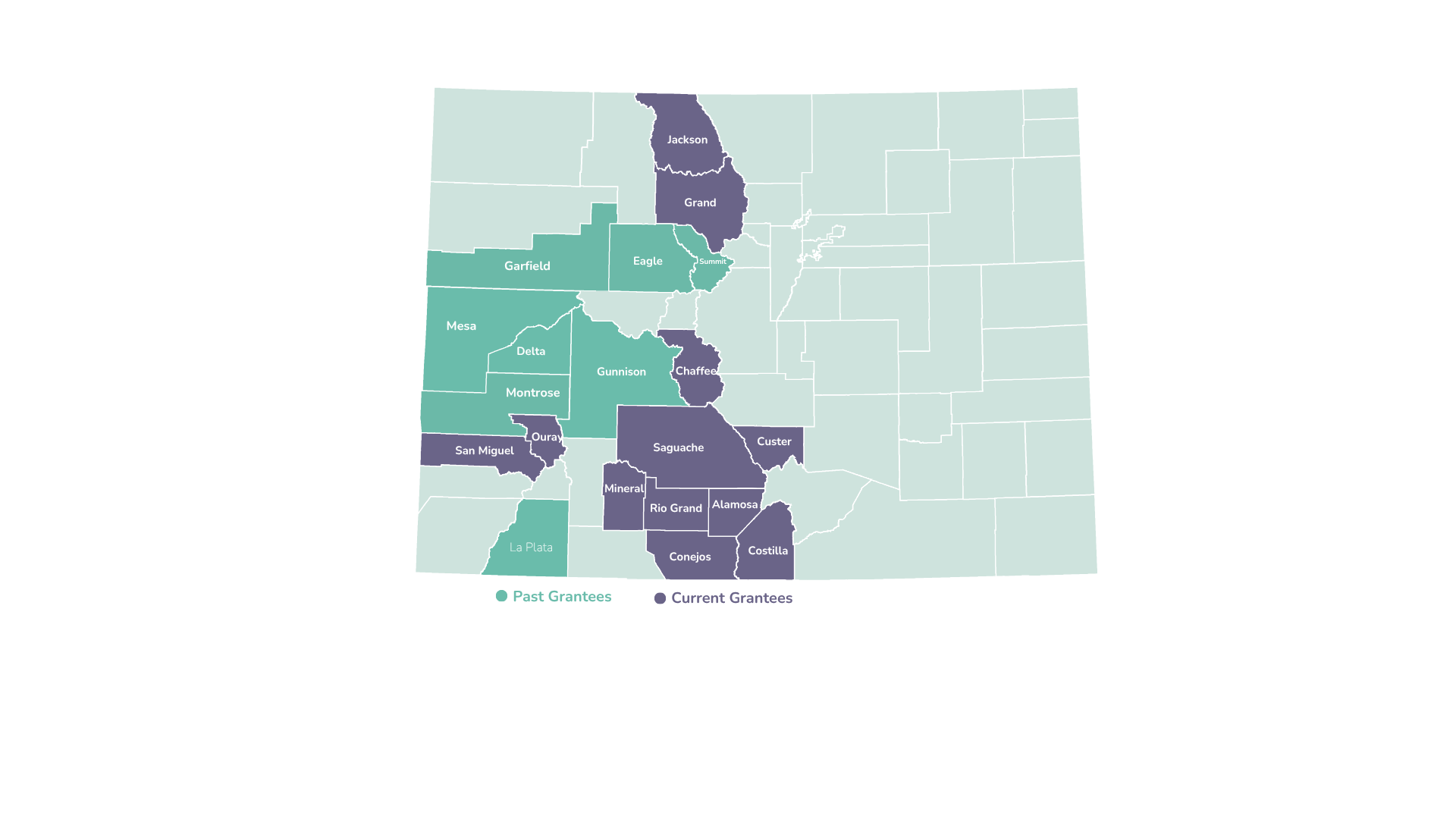
Since its launch, IMPACT BH has supported perinatal system-building efforts in eight counties across Colorado’s Western Slope and I-70 corridor. These early investments have strengthened local partnerships, expanded navigation services, and built more coordinated pathways to care for perinatal women and families.


Why This Work Remains Critical


New and emerging data continue to underscore the urgency of this work:

Partnering to Expand IMPACT BH to New Communities 

CPCQC is proud to announce the continued expansion of IMPACT BH in partnership with the Colorado Behavioral Health Administration. Beginning July 1, 2026, the program aims to support three to five additional communities through the 12-month collective impact program.

IMPACT BH will continue offering grant funding to expand local perinatal navigation services, helping ensure pregnant and postpartum women—and their infants— access vital supports. Funding may support peer support providers, community health workers, doulas, home visitors, and other trusted community-based roles that help families successfully connect to care.

Beginning in FY27, learning collaboratives will serve as a core strategy of IMPACT BH. These collaboratives will convene local clinical providers, community-based organizations, public health agencies, and other partners to strengthen local perinatal behavioral health systems. Participating communities will focus on improving identification, referral, and care for perinatal mental health and substance use needs, supported by targeted quality improvement coaching.

Apply Now to Join the IMPACT BH Community 

CPCQC will accept Expressions of Interest (EOI) from interested communities from Monday, February 2nd through Friday, March 6th. Interested communities must submit a single collective EOI to be considered for the next program cycle, beginning on July 1, 2026. 

To learn more and apply, please review the IMPACT BH Expression of Interest below:

Press Release-IMproving Perinatal Access, Coordination, and Treatment Behavioral Health (IMPACT BH) Program to Enhance Perinatal Behavioral Health Services in New Counties

Press Release

FOR IMMEDIATE RELEASE

Date: Monday, May 21, 2025

Contact: Aly Boral, CPCQC Integrated Care Program Manager, aboral@cpcqc.org 

IMproving Perinatal Access, Coordination, and Treatment Behavioral Health (IMPACT BH) Program to Enhance Perinatal Behavioral Health Services in New Counties

The Colorado Perinatal Care Quality Collaborative (CPCQC) is proud to announce the launch of the IMPACT BH program in new counties beginning July 1, 2025. 

Behavioral health plays a central role in perinatal health. Unintentional overdose and suicide accounted for 39% of pregnancy-associated deaths in Colorado from 2016 to 2020, according to the Colorado Maternal Mortality Review Committee (MMRC). In response, CPCQC launched the IMprove Perinatal Access, Coordination, and Treatment for Behavioral Health (IMPACT BH) program in partnership with the Colorado Behavioral Health Administration to serve the 1 in 5 people who are affected by perinatal mental health conditions (PMHCs). 

IMprove Perinatal Access, Coordination, and Treatment: Behavioral Health (IMPACT BH) helps communities strengthen and integrate their local perinatal behavioral health services. The program: enhances a diversity of local perinatal navigation and peer support services; provides perinatal mental health and substance use training to local healthcare providers; and helps integrate local perinatal behavioral health services through improved coordination, communication, and trust. Collectively, IMPACT BH counties work to ensure that no local mother, infant, or family falls through the cracks. 

“CPCQC is excited to introduce the IMPACT BH program to new counties” says Kylie Hibshman, Director of Integrated Behavioral Health at CPCQC. ”Together with our partners, we’re working to ensure that perinatal people access safe, effective, and respectful care from conception through one year postpartum.” 

CPCQC Launches Statewide Perinatal Substance Use Field Guide


Following a 60% Drop in Overdose-Related Maternal Deaths, Colorado Launches First Statewide Field Guide to Sustain Momentum in Perinatal Substance Use Disorder Care

Press Release

FOR IMMEDIATE RELEASE

Date: Monday, January 12. 2026

Contact: info@cpcqc.org

Statewide resource aims to reduce preventable maternal deaths and strengthen family-centered care

DENVER, Colo. — The Colorado Perinatal Care Quality Collaborative (CPCQC) today announced the release of the Perinatal Substance Use Field Guide and Sustainability Toolkit, the first statewide clinical, educational, and implementation resource dedicated to improving care for pregnant and postpartum individuals affected by substance use. The Field Guide was developed with funding and partnership from the Colorado Attorney General’s Office through its Opioid Response Strategic Impact Grant.

Perinatal substance use remains a leading contributor to maternal mortality in Colorado. Between 2018 and 2023, roughly one in four maternal deaths during that period were attributed to unintentional overdose. Every overdose-related maternal death was deemed preventable by Colorado’s Maternal Mortality Review Committee through improved access to medical care, mental health services, and substance use treatment.

Encouragingly, new statewide data shows progress and a path forward. Colorado saw a 60% reduction of pregnancy-associated deaths due to unintentional overdose in a single year, from 2022 to 2023. Sustaining this momentum requires consistent, evidence-based practices across healthcare systems, which the new Field Guide directly supports.

The Field Guide provides:

  • Clinical guidance for hospitals, obstetric and pediatric providers, nursing teams, and behavioral health professionals.
  • Legal and policy clarification, including Colorado-specific guidance on Plans of Safe Care, toxicology testing, and mandated reporting.
  • Family-facing educational materials that promote respectful, trauma-informed, and stigma-free care.
  • Quality improvement tools to help hospitals advance patient safety through evidence-based practice.
  • Perspectives from individuals with lived experience, ensuring the resource is practical, compassionate, and grounded in real-world challenges.

“Recovery thrives when we replace stigma with support and create pathways to healing in every corner of our state,” said Attorney General Phil Weiser. “Mothers struggling with substance use are often the first to face criticism and the last to seek help; they deserve our collective commitment to compassion and healing. We need sustained progress to turn the tide, and this field guide provides a strong foundation to gain more ground and to save lives.”

“Substance use is now one of the leading contributors to pregnancy-related deaths in our state, and most are preventable. Our ‘why’ is simple: every family deserves safe, respectful care,” said Amber Johnson, Director of Clinical Quality Improvement, CPCQC. “By addressing perinatal substance use with equity and urgency, we can save lives, prevent harm, and help families thrive.”

The Field Guide is available to hospitals, clinicians, community partners, and the public at cpcqc.org.

Media Contact: CPCQC Communications, Tyler Jones tjones@cpcqc.org